
NFT in sport
Author: Hawk Live LLC
Last updated:
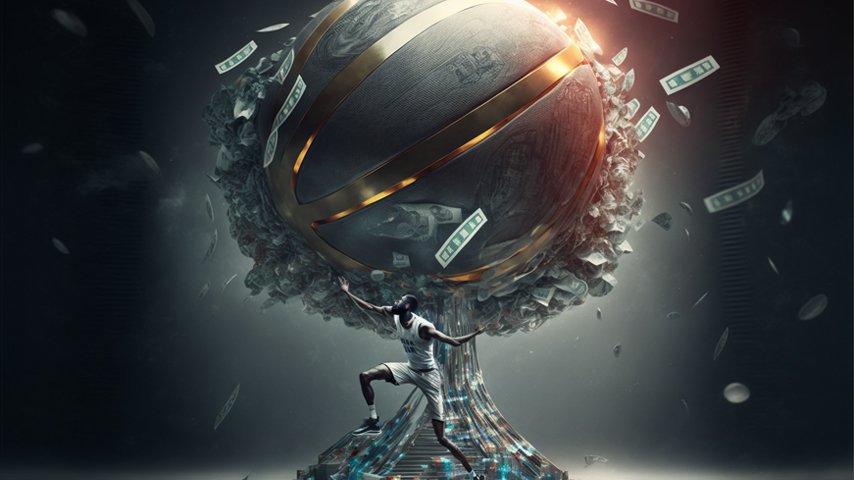
The sports industry today is not only competitions and tournaments, but also a wide range of different tools to attract fans. Today, a fan can buy not only a ticket for a match, but also a huge selection of various merchandise. And a special place in this list is occupied by non-fungible tokens, better known under the short name NFT.
Unlike traditional fan merchandise – t-shirts, cups, souvenirs – it is still a relatively new phenomenon and not everyone understands the meaning of NFT. However, non-fungible tokens open up wide and unique opportunities for sports fans, and allow clubs and athletes to earn additional funds from this.
What is NFT?
Non-fungible token or simply NFT is a unique object that has no analogues. To explain it in an extremely simple manner, NFT is a certificate that provides the owner with certain rights. This can be both a copyright in an art object – music or an image, or certain opportunities: membership in a closed club, the ability to attend certain events, including those in the virtual universes of multiplayer games, etc.
It is a kind of code, and the person who buys it gets the right to one or another digital asset. Since the code is stored on blockchain platforms, its theft or forgery is impossible, which allows us to talk about the high security of user investments.
Transforming a digital product into a token is a task that requires a lot of effort and time, so NFT is not just a picture, and such a pleasure is very expensive. Tokens are usually sold by auction: the starting price is set by the seller or the author, and potential buyers increase it by bidding. Of course, the willingness of users to shell out their money for a particular product is conditioned by a number of factors and primarily depends on how famous the author is or how popular the product is.
Thus, the famous contemporary artist, who is known online under the pseudonym Pokras Lampas, sold one of his works – it was a projection of a drawing at the Chirkeyskaya hydroelectric power station – for which he got two million rubles. After the sale, its price increased by another million. Well, the most famous example of NFT is the sensational meme in the form of a pixelated kitten with a rainbow tail, widely known as Nyan Cat: the author sold it for 600 thousand dollars.
How are NFTs taking over the sports industry?
So how did something like NFT get into the sport? In the sports field, NFT is implemented in two directions: interaction with fans and the creation of NFT content with athletes. So, in the second case, with the help of artists, athletes create unique portraits or cards with their own image.
The first person to implement this concept was Patrick Mahomes, who is known to fans of American football. He released a series of arts called “Museum of Magicians”. Each of the images was sold for 15 thousand dollars. In general, this direction is very popular among US athletes, but gradually European and even domestic stars began to join it. So, the Russian mixed martial arts fighter Khabib Nurmagomedov also offers his fans his cards, and of different types: there is a gold one for 2.9 thousand dollars, a platinum card is ten times more expensive, 29 thousand dollars. In addition, in a single copy you can buy a diamond card, and its price is 290 thousand dollars. Its owner will receive the right to meet with the legendary fighter.
Hockey player Alexander Ovechkin did not stay away from NFT either. He is convinced that the future belongs to digital technologies, and therefore fans will be interested in virtual cards no less than, for example, real autographs of their idol.
Perhaps one of the clearest examples of the success of NFT in the field of sports was the football player Lionel Messi. He launched a series of arts created by graphic designer Kode Abdo, known for his comic book and superhero-themed illustrations, as well as his work in the gaming industry.
Their NFTs are launched not only by individual athletes, but also by entire clubs. In Europe, for example, Barcelona, PSG, Juventus and others offer tokens to their fans. Fan-tokens of clubs give their owners a number of privileges. For example, they give you the right to vote on various issues, such as the design of uniforms or fan merchandise, allow you to take part in events and meetings with your favourite stars, etc.
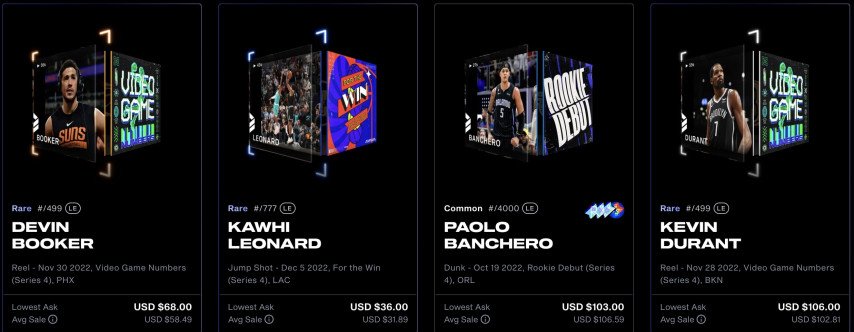
In the United States, the NBA Top Shot platform has become hugely popular among basketball fans, where fans buy and sell cards with officially licensed video clips of matches.
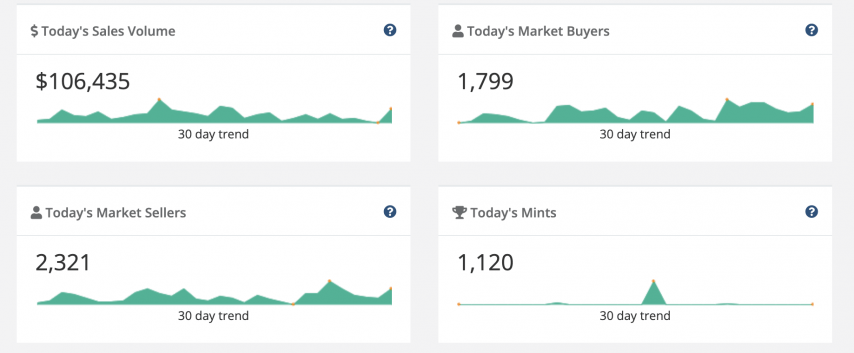
In fact, it is very similar to exchanging sports cards in real life - such merchandise is very popular in America. But NBA Top Shot is taking that craze digitally. Clips are called Moments, and their price directly depends on the rarity of the card. The most expensive cards cost more than 200 thousand dollars.
NFT in cybersports
The cybersports industry has also not been left out of the NFT. It is understandable: in the digital direction of sports, this niche most easily and organically took root and fit in. At first, it was implemented through the Play to Earn (P2E) direction, which, in fact, meant that the right to game items began to belong not to game developers, but to players, which allowed them to earn money on their hobby. And gamers have always been looking for a way to get money for a hobby. It was assumed that games in the Play to Earn format would become a full-fledged cybersports discipline, but in reality this did not find its reflection and remained an idea implemented only on paper.

Because of this, the P2E format gradually outlived its usefulness, and was replaced by Play and Earn (P&E). This is a concept that meant not playing for the sake of earning money, but playing and earning money together. The model is an organic interweaving of game mechanics with elements of decentralized finance (DeFi), NFT and metaverses. Game finance tokens (GameFi) allow players to earn legal income. Games are made on the basis of blockchain technology, and cryptocurrency is used here as an in-game tool. Thanks to this, players can convert rewards received during in-game events, as well as items of equipment created during the game, buildings and other in-game items, which are subsequently placed on marketplaces for sale, into NFTs.

Cryptogaming has firmly taken root in cybersports, and Mini Royale: Nations can be called one of the brightest and most successful examples of such games. It is a browser-based shooter game that provides users with ample opportunities not only in terms of gameplay, but also in terms of earning on NFT. Thus, a participant can receive rewards for completing missions and winning tournaments, collect in-game valuables - weapons and equipment, buildings and pets, land and costumes. All this can be converted into NFT, and then put up for sale on the marketplace if a crypto wallet is connected to the account. At the same time, Mini Royale: Nations is not just a mining tool: it has an exciting gameplay based on social mechanics and strategy.
NFT is the future of sports
The modern world is built on global digitalization, and any offline activities are inevitably transferred to the online sphere. That is why the NFT phenomenon has entered the sports field and is firmly entrenched in it. Moreover, this process has just begun, and it is assumed that in the future, NFT and sports will be inseparable. After all, this is a modern way of interaction between athletes and clubs with fans, allowing them to work with the widest range of content:
- photographs, digital autographs, snapshots and videos of gaming moments;
- avatars and stickers depicting athletes;
- art and artistic animation;
- star quotes;
- tickets and invitations both directly to sporting events, and to entertainment and related programs for fans (e.g. private parties, etc., and possibly even with the participation of famous athletes).
Already today, NFT is showing itself as a popular, and most importantly, profitable direction. This is confirmed by striking examples. So, the Mookie Betts Legendary tokens of the legendary baseball player Mookie Betts in the form of the Boston Red Sox club are worth more than $ 2 million. For about the same amount, it is fashionable to buy a card of another baseball legend Reggie Jackson, his colleague Aaron Judge, football player Alex Morgan.
The 2020-21 Rare Diego Maradona NFT with famous Argentine footballer Diego Maradona is valued at $4.3 million. An 8-bit portrait of basketball player Michael Jordan Michael Jordan SportPunk by Larva Labs will cost the buyer $5.06 million. A photo and autograph of Jermall Charlo, WBC Middleweight World Champion, Jermall Charlo Lions Only GOLD ULTIMATE is even more expensive - more than $19 million.
A die-hard fan of New York Yankees fielder Brett Gardner can afford the rights to his virtual action figure, but at a cost of $21 million, and the price rises depending on how well the athlete plays. The raw file of Kimani Okwara's LeBron James Statue photo is worth $35 million and is one of the most successful NFTs.
Fan tokens are the future of the sports industry in today's world. They are often launched in partnership with cryptocurrency platforms – for example, the Porto football club from Portugal and the Italian football club Lazio cooperate with the Binance exchange. In the summer of 2022, Binance launched NFT tickets for matches with Lazio in addition to regular tickets. And we are talking about both single games and season tickets, which are sold on special offers and involve discounts or privileges such as exclusive access to the team.
Tokens are an advanced alternative to traditional tickets. It should be noted that the NFT format helps to prevent fraudulent schemes with double sales or forgery of tickets. In addition, a token, unlike a regular ticket, cannot be lost, stolen, or damaged. Therefore, this form is undoubtedly convenient and beneficial.
Unfortunately, in Russia, the NFT format has not yet become as widespread as in Europe and the United States of America. Nevertheless, domestic athletes are already introducing NFT among their fans and fans, and individual sports clubs are gradually putting their activities on a digital footing.
Undoubtedly, this promising direction will still be developed in the vast world and Russian sports industry. After all, it makes it possible to create an exclusive for fans, make the process of interaction with them mutually beneficial and convenient, and, of course, earn additional funds. And fans get a unique opportunity to become owners of something exclusive with the help of digital technologies.