
The negative impact of Dota 2 and other esports games on players' health
Author: Hawk Live LLC
Last updated:
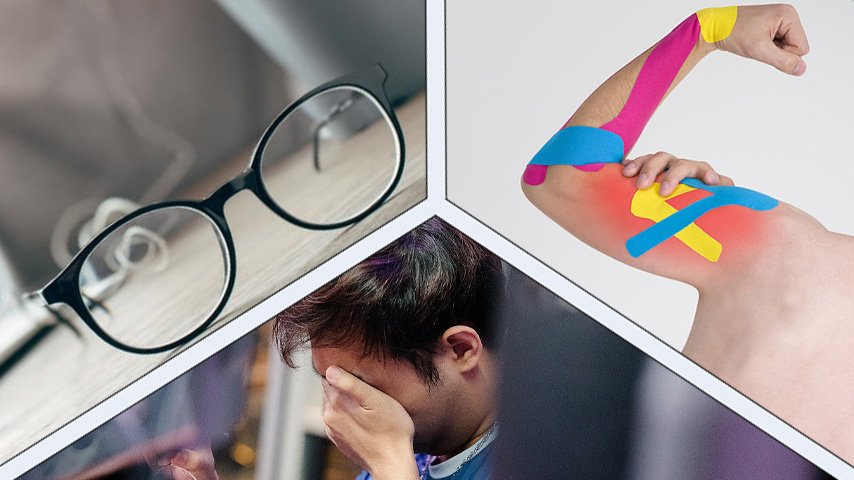
Esports has become an integral part of modern culture, attracting millions of players and viewers worldwide. One of the most popular games in this sphere is Dota 2, which not only captivates but also raises serious questions about its impact on players' mental and physical health.
Mental Health
According to the study "Physical Activity and Health Promotion in Esports and Gaming: Discussing Unique Opportunities for an Unprecedented Cultural Phenomenon" conducted by the University of Bern in Switzerland, the mental health of esports players is subject to significant risks. The intense competitive environment can lead to high levels of stress and anxiety.
Research has shown that esports players often experience burnout due to prolonged training and the pressure to continuously perform at a high level. According to a 2020 study, 40% of surveyed professional players reported experiencing burnout symptoms during their careers.

Stress and Anxiety
As shown in the study "The Relationship Between Esports Participation and Health," published in Sports Medicine, stress and anxiety in esports are not only caused by the demands for high-level play. Significant influences also include interactions with fans, media pressure, and the need to adhere to sponsorship contracts. The study results indicated that high levels of stress and anxiety among esports players are associated with frequent training (more than 6 hours a day) and the high intensity of competitive games.
Burnout
Burnout among esports players manifests as physical and emotional exhaustion, cynicism, and decreased performance. In the study conducted by the University of Bern in Switzerland, 56% of professional Dota 2 players reported regular symptoms of burnout, highlighting the need for strategies to manage stress and support mental health.
Addictive Behavior
Esports games can also contribute to addictive behavior. Some players become so engrossed in the game that they neglect their social responsibilities and personal lives. This leads to social isolation, deteriorating relationships with family and friends, and decreased academic and professional performance. In a study published in "Frontiers in Sports and Active Living", 34% of surveyed players admitted that they play at the expense of other important aspects of their lives.
Physical Health
Players' physical health is also at risk due to prolonged periods of sedentary activity. Long hours spent at the computer lead to posture problems, back and neck pain. Lack of physical activity increases the risk of obesity, cardiovascular diseases, and diabetes, as indicated by the study "The Relationship Between Esports Participation and Health".
Posture Problems
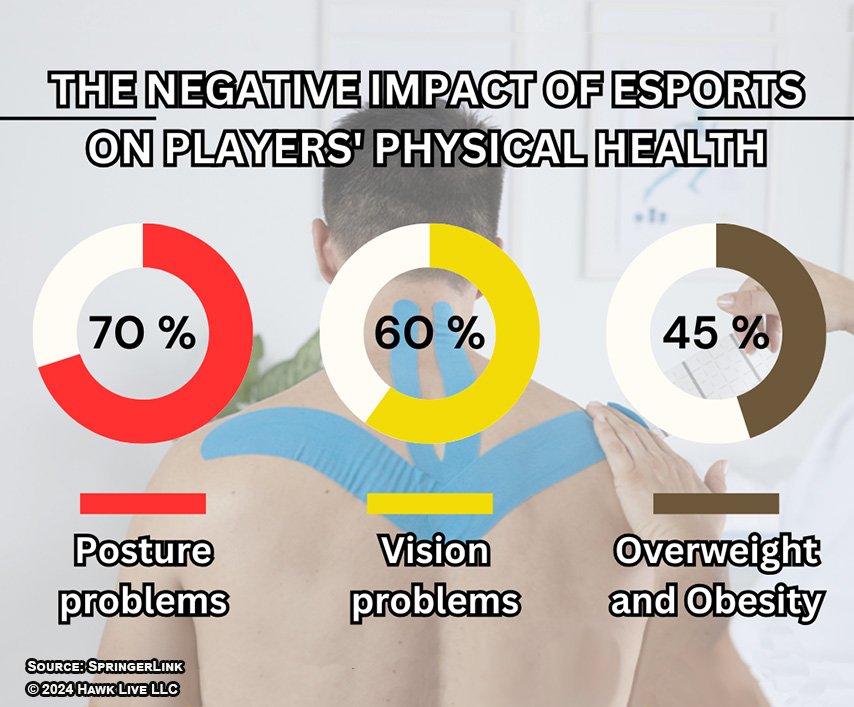
Constant sitting in poor posture can lead to severe posture problems. Studies have shown that 70% of professional players suffer from chronic back and neck pain due to extended sitting at the computer.
Vision Issues
Excessive time spent in front of screens negatively impacts vision. Players frequently report eye strain, dryness, and irritation. In the long term, this can lead to worsening vision and the need for medical intervention. A study conducted in 2021 found that 60% of professional players exhibit symptoms of computer vision syndrome.
Lack of Physical Activity
Lack of physical activity is a key factor contributing to obesity and cardiovascular diseases among professional players. Research has shown that 45% of surveyed players are overweight or obese due to a sedentary lifestyle and poor diet.
Social Aspects
Esports also impacts the social aspects of players' lives. The virtual environment often lacks norms and behavioral rules, which can contribute to aggression and cyberbullying. Verbal abuse and discrimination in esports can have serious effects on mental health, causing feelings of insecurity and social isolation.

Cyberbullying
The study "The Social Impact of Electronic Sports" revealed that cyberbullying in esports is a significant problem. Research indicated that 25% of professional players have been subjected to verbal attacks and insults from other players or viewers.
Social Isolation
Players who dedicate a large amount of time to gaming often neglect their social responsibilities and personal lives. This leads to social isolation and deterioration in relationships with family and friends. In a study conducted among professional players, 40% of respondents reported difficulties maintaining social connections due to their gaming activities.
Conclusion
Despite the benefits of esports, including the development of cognitive abilities and improved reaction times, its negative impact on mental and physical health should not be overlooked. To ensure players' well-being, it is essential to focus not only on their physical training but also on psychological support and the development of programs aimed at preventing and treating potential disorders.


![No[o]ne names the team that will underperform in the new season](https://hawk.live/storage/images/posts/noone-revealed-how-he-baited-opponents-before-the-tournament-24933.jpg)