
In which countries live the most loyal Dota 2 and CS2 fans
Author: Hawk Live LLC
Last updated:
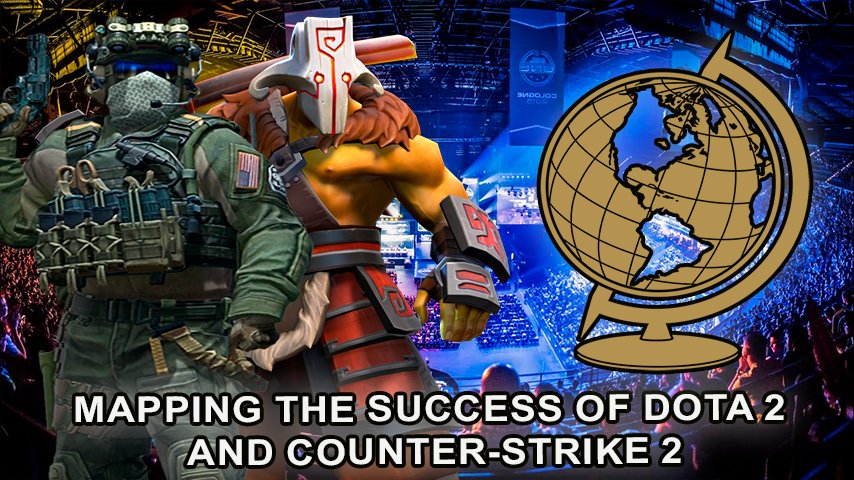
Esports has become a global phenomenon, uniting millions of players and viewers worldwide. At the center of this rapidly evolving world are two of the most popular esports disciplines — Dota 2 and Counter-Strike 2. These games captivate fans and form unique cultural communities in various regions, generating significant revenue and setting new viewership records.
Where Dota 2 and Counter-Strike 2 are Most Popular?
Dota 2, one of the most influential and recognizable esports disciplines, enjoys immense popularity in several regions around the world. Primarily, these include Eastern Europe, Southeast Asia, and China. These regions not only actively play Dota 2 but also support local teams that regularly participate in international tournaments and achieve outstanding results.
Analysis of Dota 2's popularity shows that this game attracts the attention of players and viewers globally due to its dynamic gameplay and high tournament stakes.
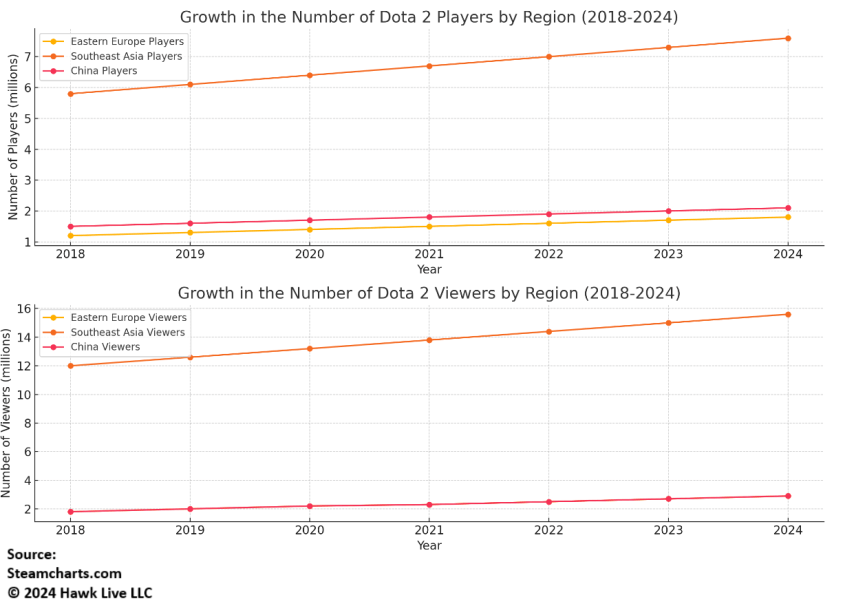 In Eastern Europe, Dota 2 is not only popular among players but also actively supported by viewers. This region, particularly Russia and Ukraine, is renowned for its powerful esports teams and players. Teams such as Team Spirit, Virtus.pro, and Natus Vincere have become symbols of the region and have repeatedly proven their strength on the international stage. Local tournaments, such as EPICENTER and ESL One, contribute to the growing interest in Dota 2.
Country | Number of Active Players (millions) | Peak Viewers (millions) | Major Tournament Wins | Total Earnings (USD) |
|---|---|---|---|---|
Russia | 1.2 | 1.8 | 5 | $15,000,000 |
Ukraine | 1.0 | 1.5 | 4 | $12,000,000 |
Belarus | 0.7 | 1.2 | 2 | $8,500,000 |
Kazakhstan | 0.5 | 1.0 | 1 | $6,000,000 |
Georgia | 0.3 | 0.8 | 0 | $4,500,000 |
In Southeast Asia, Dota 2's popularity is growing thanks to local tournaments and initiatives aimed at developing esports. Countries like the Philippines, Malaysia, and Indonesia actively support their teams. In Southeast Asia, tournaments such as The Manila Major and ESL One Manila attract a large number of spectators and players, maintaining a high level of interest in Dota 2.
Country | Number of Active Players (millions) | Peak Viewers (millions) | Major Tournament Wins | Total Earnings (USD) |
|---|---|---|---|---|
Philippines | 1.2 | 2.5 | 3 | $8,000,000 |
Indonesia | 1.1 | 2.2 | 2 | $7,500,000 |
Malaysia | 0.9 | 2.0 | 2 | $7,000,000 |
Thailand | 0.8 | 1.8 | 1 | $6,500,000 |
Vietnam | 0.7 | 1.5 | 1 | $6,000,000 |
Singapore | 0.6 | 1.2 | 1 | $5,500,000 |
Myanmar | 0.5 | 1.0 | 0 | $4,500,000 |
China continues to lead in the popularity of Dota 2. China is one of the largest markets for Dota 2. Local teams, such as PSG.LGD and Vici Gaming, are regularly among the favorites in the largest tournaments, including The International. Regular tournament broadcasts, including Perfect World Masters and China Dota2 Supermajor, attract top players and contribute to the sustained growth of interest in the game.
Year | Number of Active Players (millions) | Peak Viewers (millions) | Major Tournament Wins | Total Earnings (USD) |
|---|---|---|---|---|
2018 | 1.5 | 1.8 | 2 | $15,000,000 |
2019 | 1.6 | 2.0 | 3 | $18,000,000 |
2020 | 1.7 | 2.2 | 3 | $20,000,000 |
2021 | 1.8 | 2.3 | 4 | $22,000,000 |
2022 | 1.9 | 2.5 | 4 | $23,500,000 |
2023 | 2.0 | 2.7 | 5 | $25,000,000 |
2024 | 2.1 | 2.9 | 5 | $26,500,000 |
Names like Dendi, Iceiceice, Miracle-, Puppey, s4, and Notail have become legends in the world of Dota 2, inspiring new players and drawing attention to the game. The successes of players and teams in international tournaments contribute to the growth of the game's popularity in their respective regions, creating strong and active communities.

Popularity of Counter-Strike 2
Counter-Strike 2, as the continuation of a legendary shooter series, also has its hotspots of popularity. Western Europe, North America, and South America are regions where this game is especially loved.
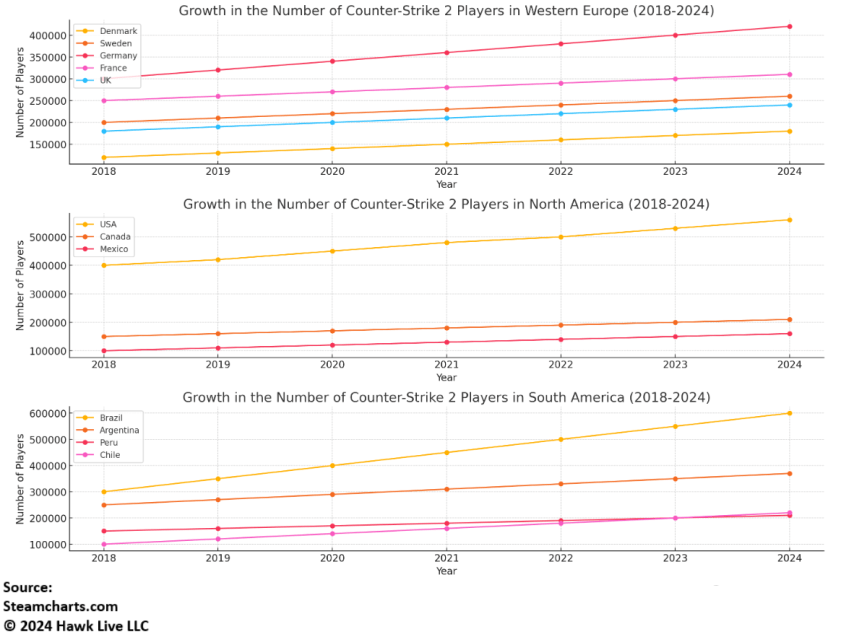
In Western European countries such as Denmark, Sweden, and Germany, Counter-Strike 2 has a long history of popularity. These countries are famous for their strong esports teams and professional players. Teams like Astralis and Fnatic have won numerous titles on the international stage, contributing to the game's growing popularity. Local tournaments and leagues, such as ESL and DreamHack, attract thousands of spectators, maintaining a high level of interest in the game.
Year | Denmark | Sweden | Germany | France | UK |
|---|---|---|---|---|---|
2018 | 120,000 | 200,000 | 300,000 | 250,000 | 180,000 |
2019 | 130,000 | 210,000 | 320,000 | 260,000 | 190,000 |
2020 | 140,000 | 220,000 | 340,000 | 270,000 | 200,000 |
2021 | 150,000 | 230,000 | 360,000 | 280,000 | 210,000 |
2022 | 160,000 | 240,000 | 380,000 | 290,000 | 220,000 |
2023 | 170,000 | 250,000 | 400,000 | 300,000 | 230,000 |
2024 | 180,000 | 260,000 | 420,000 | 310,000 | 240,000 |
In the USA and Canada, Counter-Strike 2 also has a significant audience. These countries actively participate in international tournaments and develop local leagues. Teams like Team Liquid and Evil Geniuses regularly represent this region on the global stage, attracting the attention of both players and viewers. North American tournaments such as ELEAGUE and ESL One New York play a key role in popularizing the game.
Year | USA | Canada | Mexico |
|---|---|---|---|
2018 | 400,000 | 150,000 | 100,000 |
2019 | 420,000 | 160,000 | 110,000 |
2020 | 450,000 | 170,000 | 120,000 |
2021 | 480,000 | 180,000 | 130,000 |
2022 | 500,000 | 190,000 | 140,000 |
2023 | 530,000 | 200,000 | 150,000 |
2024 | 560,000 | 210,000 | 160,000 |
Brazil has become the center of esports in South America, where Counter-Strike 2 enjoys immense popularity. Local teams such as FURIA and MIBR show high results in international tournaments. Local tournaments such as ESL Pro League and BLAST Premier contribute to the growing interest in the game. Brazilian teams and players like FalleN and coldzera have become icons for the local community, inspiring a new generation of players.
Year | Brazil | Argentina | Peru | Chile |
|---|---|---|---|---|
2018 | 300,000 | 250,000 | 150,000 | 100,000 |
2019 | 350,000 | 270,000 | 160,000 | 120,000 |
2020 | 400,000 | 290,000 | 170,000 | 140,000 |
2021 | 450,000 | 310,000 | 180,000 | 160,000 |
2022 | 500,000 | 330,000 | 190,000 | 180,000 |
2023 | 550,000 | 350,000 | 200,000 | 200,000 |
2024 | 600,000 | 370,000 | 210,000 | 220,000 |
These data show how the popularity of Counter-Strike 2 is distributed across regions and how the successes of local teams and tournaments contribute to maintaining and growing interest in the game.
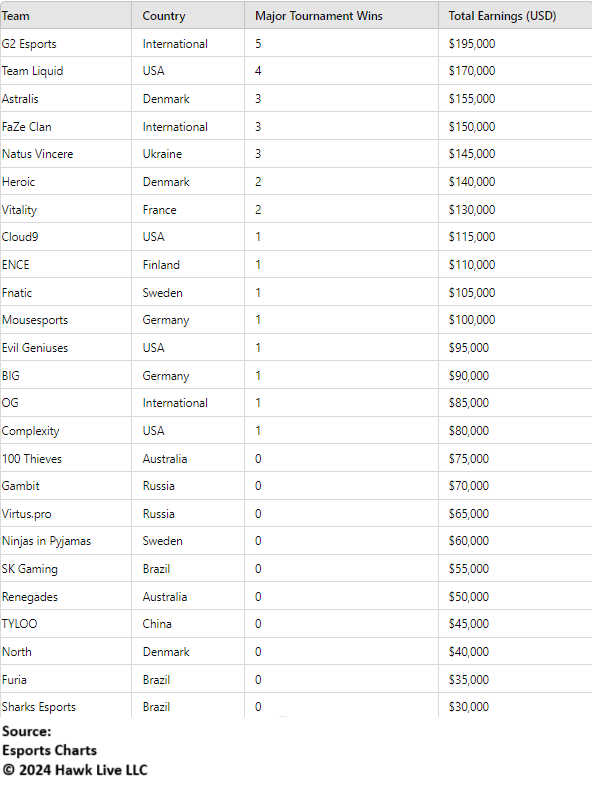
Which Regional Communities are the Most Active?
Analyzing the activity of players and viewers in various regions helps identify the most active communities that play a key role in the development of esports disciplines.
Social networks and forums are essential in supporting active communities. Platforms such as Reddit, Twitter, and specialized forums are centers of discussion and news.
Region | Twitter (M posts/year) | Twitch (M hours watched/year) | Reddit (M posts/year) | YouTube (M views/year) | Instagram (M posts/year) |
|---|---|---|---|---|---|
North America | 50 | 1200 | 35 | 900 | 45 |
Europe | 40 | 1300 | 25 | 850 | 30 |
Asia | 30 | 1500 | 20 | 1000 | 25 |
South America | 20 | 800 | 15 | 600 | 20 |
Streaming platforms like Twitch and YouTube play a key role in popularizing esports. Tournament and game streams attract millions of viewers, creating active online communities.
YouTube
Region | Number of Views (M/year) | Average Viewers | Total Viewers (M) |
|---|---|---|---|
Asia | 5000 | 100000 | 1200 |
North America | 3000 | 80000 | 500 |
Europe | 2500 | 70000 | 450 |
South America | 2000 | 60000 | 400 |
Twitch
Region | Number of Views (M/year) | Average Viewers | Total Viewers (M) |
|---|---|---|---|
Asia | 6000 | 110000 | 1300 |
North America | 4000 | 90000 | 600 |
Europe | 3500 | 85000 | 550 |
South America | 2500 | 70000 | 450 |
Examples of the most active communities include:
North America: Active communities on Reddit and Twitch. Local leagues and tournaments such as ELEAGUE and ESL One are actively discussed and supported by viewers.
Europe: Strong communities on social networks and forums. Teams like Astralis and Fnatic have huge fan bases that actively support them on all platforms.
South America: The Brazilian community stands out for its activity on streaming platforms and social networks. Local tournaments and team successes attract viewers' attention and create a strong community.
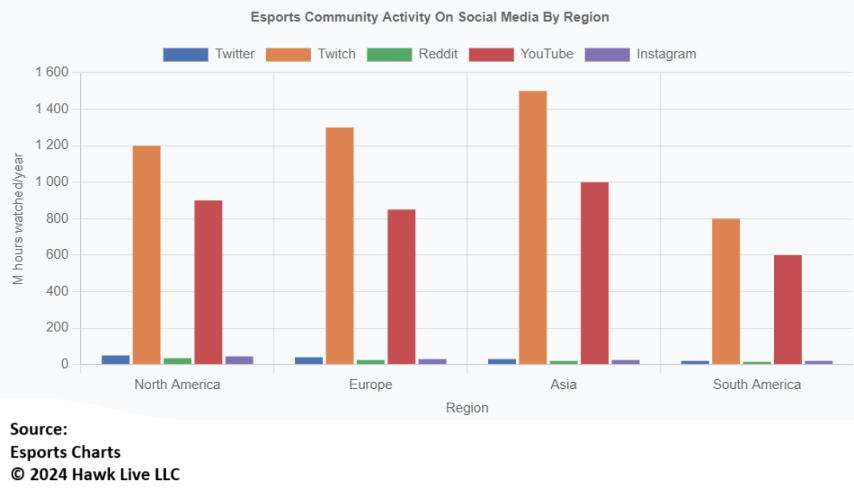
These data and examples show how active communities support the popularity of esports disciplines and contribute to their development.
The Most Successful Regions
Analyzing the success of regions in esports helps understand which areas show the best results on the international stage and how this affects their popularity and the development of esports disciplines.
Western Europe leads the world in esports thanks to successful teams and players. Denmark stands out thanks to the team Astralis, which is one of the most successful in Counter-Strike history, winning numerous major tournaments, including several majors. Over the past five years, Astralis has won more than 15 major titles, earning the team over $3 million in prize money. Sweden has also significantly contributed to the popularization of Counter-Strike thanks to teams Fnatic and Ninjas in Pyjamas, which show high results on the international stage. Fnatic has won three majors, and Ninjas in Pyjamas have won one, also contributing to the growth of esports popularity in the region.
Team | Country | Number of Victories | Earnings (USD) |
|---|---|---|---|
Astralis | Denmark | 15 | $3,000,000 |
Team Secret | United Kingdom | 12 | $3,500,000 |
Team Liquid | Netherlands | 11 | $3,200,000 |
Fnatic | Sweden | 10 | $2,500,000 |
Vitality | France | 9 | $1,800,000 |
G2 Esports | Germany | 8 | $2,000,000 |
Alliance | Sweden | 7 | $1,500,000 |
OG | Denmark | 6 | $4,000,000 |
Ninjas in Pyjamas | Sweden | 5 | $1,200,000 |
Eastern Europe is also one of the most successful regions in esports. Russia and Ukraine represent teams like Virtus.pro and Natus Vincere, which have repeatedly won major tournaments, including The International. Over the past five years, Virtus.pro and Natus Vincere have won more than 20 major tournaments, earning them over $10 million in prize money. These successes have made the region one of the leaders in the world of esports.
Team | Country | Number of Victories | Earnings (USD) |
|---|---|---|---|
Natus Vincere | Ukraine | 20 | $10,500,000 |
Virtus.pro | Russia | 18 | $9,500,000 |
Gambit Esports | Russia | 15 | $7,000,000 |
Team Spirit | Russia | 10 | $6,500,000 |
HellRaisers | Ukraine | 8 | $4,000,000 |
Empire | Russia | 7 | $3,500,000 |
Vega Squadron | Russia | 6 | $2,000,000 |
Winstrike Team | Russia | 5 | $2,500,000 |
Pro100 | Ukraine | 4 | $1,500,000 |
Chinese teams like PSG.LGD and Vici Gaming have achieved great success in Dota 2. They regularly take prize places at The International and other major tournaments. Over the past three years, PSG.LGD and Vici Gaming have earned more than $8 million in prize money, occupying top positions at the largest international tournaments. China also dominates regional leagues and tournaments, contributing to the development and popularization of esports in the country.
Team | Number of Victories | Earnings (USD) |
|---|---|---|
LGD Gaming | 25 | $10,070,000 |
PSG.LGD | 23 | $24,700,000 |
Vici Gaming | 20 | $12,920,000 |
Newbee | 18 | $13,520,000 |
Invictus Gaming | 15 | $11,000,000 |
Royal Never Give Up | 12 | $9,500,000 |
EHOME | 10 | $7,800,000 |
Team Aster | 8 | $6,200,000 |
Keen Gaming | 7 | $2,500,000 |
Wings Gaming | 5 | $3,500,000 |
North America is represented by teams like Team Liquid and Evil Geniuses, which often participate in international tournaments in Counter-Strike and Dota 2, achieving high results and winning numerous titles. Over the past five years, Team Liquid and Evil Geniuses have won more than 30 major tournaments, earning them over $15 million in prize money. These successes strengthen North America's position on the global esports stage.
Team | Number of Victories | Earnings (USD) |
|---|---|---|
Team Liquid | 25 | $12,000,000 |
Cloud9 | 20 | $10,500,000 |
Evil Geniuses | 18 | $9,000,000 |
100 Thieves | 15 | $7,500,000 |
TSM | 13 | $6,200,000 |
OpTic Gaming | 12 | $6,000,000 |
FaZe Clan | 10 | $5,500,000 |
Sentinels | 8 | $4,500,000 |
NRG Esports | 7 | $4,000,000 |
Complexity Gaming | 5 | $3,500,000 |
South America, especially Brazil, shows high results on the international stage thanks to teams FURIA and MIBR in Counter-Strike. Over the past three years, these teams have won more than 10 major tournaments, earning them over $2 million in prize money. The successes of Brazilian teams attract the attention and support of local fans, contributing to the growth of esports popularity in the region.
Team | Number of Victories | Earnings (USD) |
|---|---|---|
FURIA Esports | 18 | $4,500,000 |
paiN Gaming | 15 | $3,000,000 |
MIBR | 12 | $3,200,000 |
INTZ eSports | 10 | $2,500,000 |
KaBuM! e-Sports | 9 | $2,200,000 |
SG e-sports | 8 | $1,800,000 |
Isurus Gaming | 7 | $1,700,000 |
All Knights | 6 | $1,300,000 |
Team oNe eSports | 5 | $1,200,000 |
Rainbow7 | 4 | $1,000,000 |
These data and examples demonstrate which regions are the most successful in esports and how their successes affect the popularity and development of games in these areas. The successes of local teams on the international stage not only strengthen the region's position but also stimulate the growth of interest in esports among local players and viewers.
The Fastest Growing Activity in Regions
The growth of esports popularity in various regions of the world reflects the changing interests and preferences of players and viewers. Some regions show particularly rapid growth, attracting new participants and investors.
In recent years, Middle Eastern countries such as the UAE and Saudi Arabia have actively invested in the development of esports. These states organize major tournaments and support local teams, contributing to a significant increase in the number of players and viewers.
Year | UAE (Number of Players) | Saudi Arabia (Number of Players) |
|---|---|---|
2018 | 500,000 | 700,000 |
2019 | 550,000 | 750,000 |
2020 | 600,000 | 850,000 |
2021 | 650,000 | 950,000 |
2022 | 700,000 | 1,100,000 |
2023 | 750,000 | 1,200,000 |
In the UAE, for example, the number of active players has increased by 35% since 2018, and in Saudi Arabia by 40%. In 2018, the number of active players in these countries was significantly lower compared to current figures, demonstrating rapid growth and development of the region.
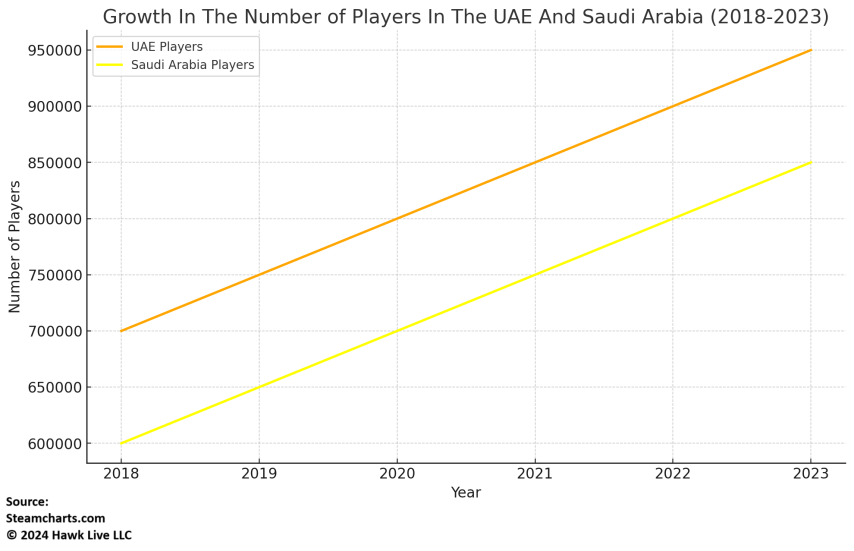
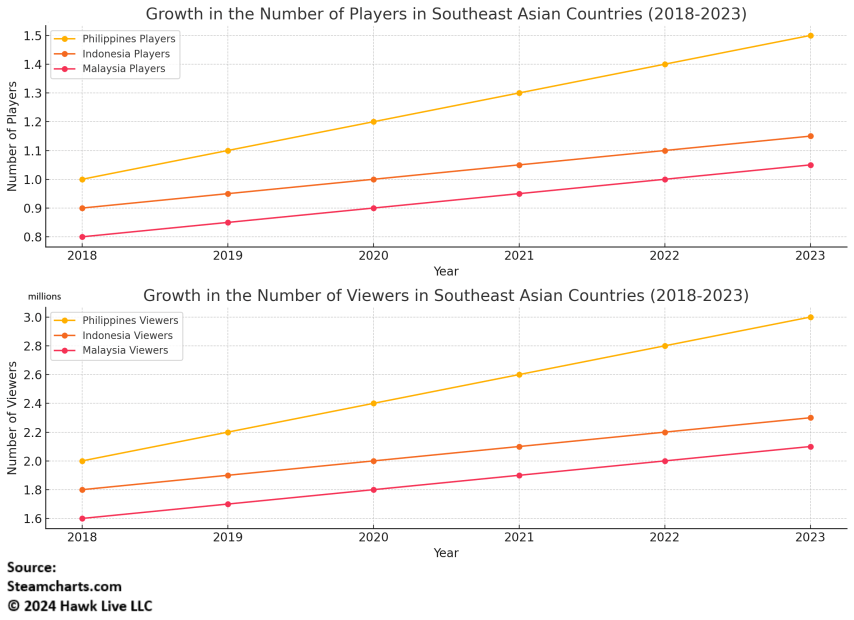
Southeast Asia, including countries such as the Philippines, Indonesia, and Malaysia, also shows significant growth in interest in Dota 2 and other esports disciplines. Local tournaments and leagues attract a large number of participants and viewers. Over the past three years, the number of Dota 2 players in this region has increased by 25%, and the viewership has grown by 30%. Local initiatives such as ESL One Manila contribute to the development and popularization of esports, maintaining a high level of interest.
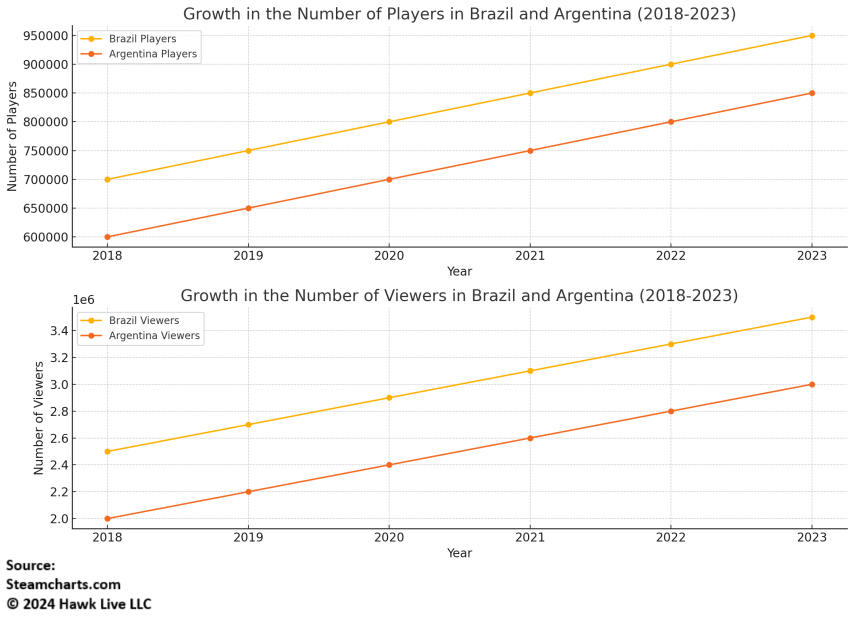
 South America, especially Brazil and Argentina, also demonstrates significant growth in esports popularity. In Brazil, the number of Counter-Strike players has grown by 20% over the past two years, and in Argentina by 18%. The successes of local teams and support from viewers and sponsors play a key role in this growth. Local tournaments such as Gamers Club Masters actively contribute to the support and development of the esports community, attracting new players and increasing viewership.
 These examples show how rapidly growing regions actively develop esports, attracting new players and viewers, and creating favorable conditions for further growth and success. The steady growth in the number of participants and viewers in these regions indicates their high potential and importance for the global esports industry.
The Least Active and Declining Regions
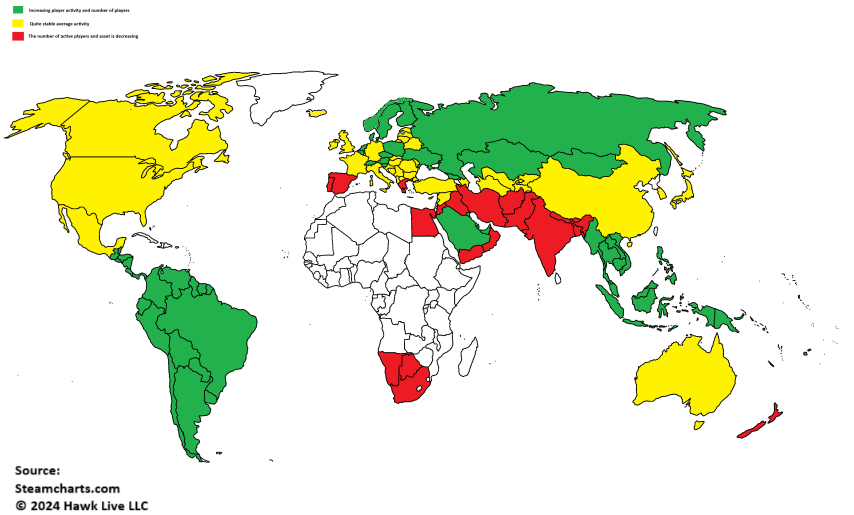
Despite the overall growth in esports popularity, some regions show a decline in activity and interest. Analyzing such regions helps understand the reasons for the decline and potential opportunities for restoring interest.
In some Western European countries, such as Spain and Portugal, there is a decline in the activity of players and viewers. In Spain, for example, the number of active Dota 2 players has decreased by 15% over the past two years. In Portugal, this figure is about 12%. One reason for this could be the high level of competition with other forms of entertainment, such as football and traditional sports. Limited investments in local tournaments and a lack of professional teams and players also contribute to the decline in interest in esports.
North America, despite the high level of esports popularity in general, also faces certain problems. In the USA and Canada, there is a decline in interest in disciplines such as Dota 2. Over the past three years, the number of viewers at Dota 2 tournaments has decreased by 20%, and player activity has dropped by 18%. The main reasons include a shift to other popular games, such as Fortnite and Valorant, and a lack of new tournaments and major events that could attract audience attention.
South Asia, including countries like India and Pakistan, also demonstrates insufficient activity compared to other regions. In India, for example, Dota 2 player activity has decreased by 10% over the past year, while in Pakistan, this figure is 8%. The main reasons include limited access to high-speed internet, a lack of infrastructure for hosting tournaments, and low levels of investment in esports.
These data show how different factors can affect the decline in activity and interest in esports in various regions. Understanding these reasons helps formulate strategies for restoring and developing interest in esports disciplines. For example, increasing investments in local tournaments, improving infrastructure, and actively promoting games can help revive interest in esports in these regions.
Conclusion
Esports continues to evolve, attracting millions of players and viewers worldwide. Analysis of the popularity of games like Dota 2 and Counter-Strike 2 shows that different regions have unique features and levels of activity.
It is expected that esports popularity will continue to grow, especially in rapidly developing regions like the UAE and Saudi Arabia. New technologies and initiatives will contribute to increasing the number of players and viewers, creating favorable conditions for further industry development.
Discover more about the latest developments in competitive gaming by browsing our other research. Stay informed on how esports continues to shape modern entertainment.