
In what games do Americans spend thousands of dollars?
Author: Hawk Live LLC
Last updated:
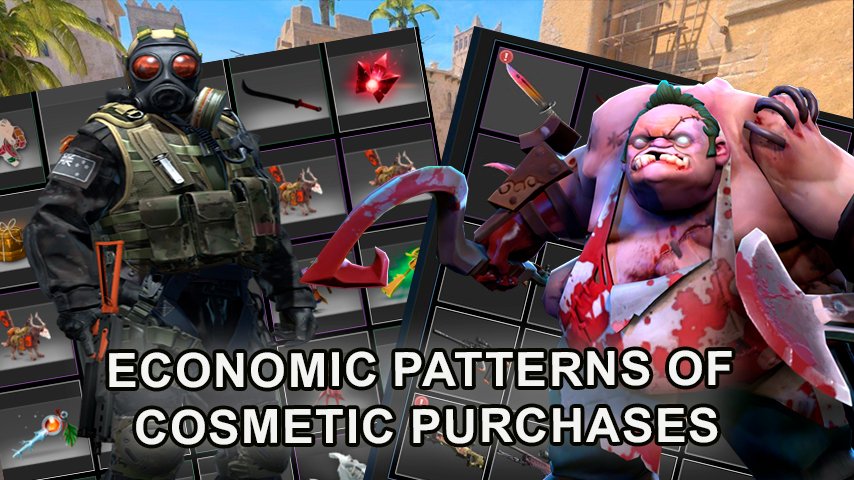
The landscape of video gaming has evolved significantly from the days of mere entertainment to becoming a robust platform for economic exchange, particularly in the realm of Massively Multiplayer Online (MMO) games. The U.S. has been a fertile ground for this evolution, witnessing a surge in the transaction of virtual goods, particularly cosmetic items, which serve as a testament to the game's integral social and economic components.
How much do people spend on skins on average?
Cosmetic microtransactions in video games are not merely a source of aesthetic pleasure but have burgeoned into a significant economic activity. In 2023 alone, in-game cosmetics generated a staggering $50 billion globally, showcasing their importance not only as player accessories but as major economic drivers in gaming.
The average spending on skins and cosmetic items in games varies depending on region, age, gender, and gaming experience. Research shows that for players actively participating in microtransactions, the amount spent on cosmetic items can represent a significant portion of their gaming budget.
Statistics from popular studies:
Average Spending per Player. According to Accredited Debt Relief, the average American gamer spends approximately $229 over their lifetime on microtransactions in MMO games. This includes not only cosmetic items but also other in-game purchases.
London School of Economics and Political Science Research: Data reveals that young men aged 18 to 24, who actively play games, spend an average of $84 per year on skins and cosmetics in popular games like Fortnite, Call of Duty, and League of Legends.
Asian and European Markets. In Asian countries, spending on cosmetic items tends to be higher. In Southeast Asian countries like South Korea and China, players may spend up to $150 per year on cosmetics, while in Europe, the figure is around $60-70.
Spending in Battle Royale Games. In games like Fortnite and PUBG, average spending on cosmetic items can reach up to $50 per month among active players, which confirms the strong impact of the "free-to-play" monetization model. According to Sensor Tower, in 2022, Fortnite players spent $5.1 billion on cosmetic items, skins, and emotes.
Gender and Demographics. Men generally spend more on skins compared to women: men can spend up to $70 per month, while women spend around $40. The 25-34 age group shows the most active participation in microtransactions.
These insights highlight the importance of microtransactions in the modern gaming industry and their substantial economic impact on both players and developers.
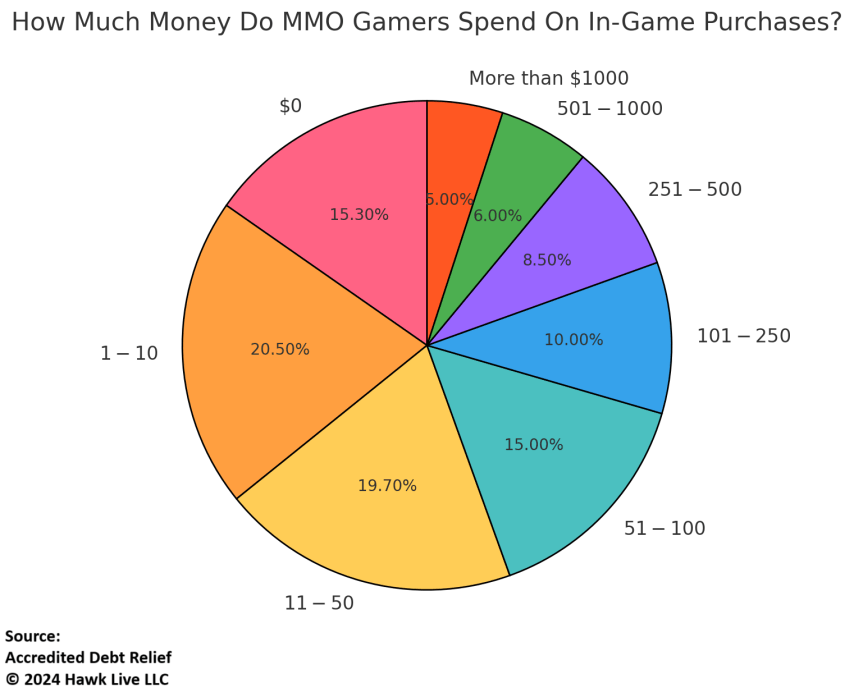 Are people ready to spend money on skins?
The spending on cosmetics is influenced by various factors including gameplay necessity, social influence, and the desire for personalization. The demographic breakdown reveals that men tend to spend more and prefer using debit cards, while women spend less and favor credit cards.
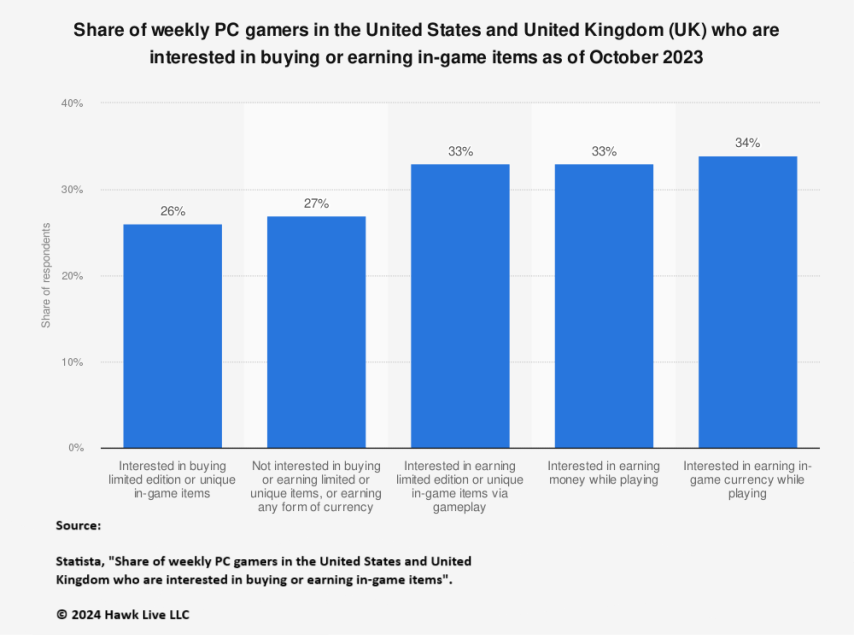 Despite their popularity, microtransactions face criticism and scrutiny. Concerns about their impact on gameplay fairness and potential for encouraging excessive spending, especially among younger players, persist.
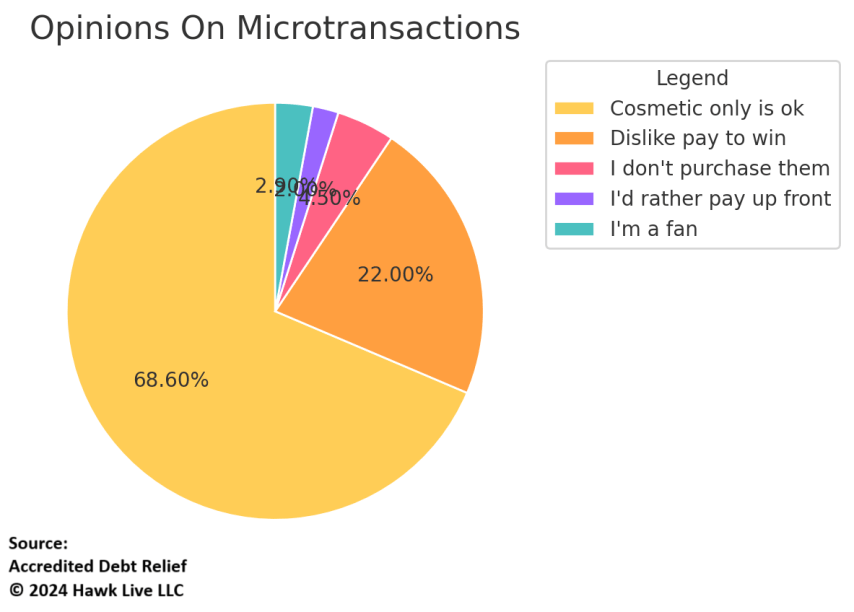 What is Microtransactions?
Microtransactions are small, often in-game purchases that offer virtual goods or benefits. Typically found in free-to-play games, these transactions allow players to purchase items that enhance the visual appeal or offer new ways to express themselves within the game without affecting gameplay balance. Despite their size, the cumulative impact of microtransactions can significantly contribute to a game's revenue, making them a crucial part of modern gaming economies.
Popular Games with In-Game Cosmetics
Some of the most notable games that integrate in-game cosmetics effectively include:
World of Warcraft: Known for its expansive world and deep lore, this game offers a variety of skins, mounts, and other cosmetic items that enhance the player experience.
Fortnite: A leader in the battle royale genre, Fortnite uses cosmetic items as its primary revenue stream, featuring an ever-changing array of skins and emotes that keep the game fresh and engaging.
League of Legends: As one of the pioneers in leveraging microtransactions for cosmetic items, League of Legends offers countless skins and aesthetic upgrades, continually fueling its massive eSports scene.
Call of Duty: Especially in its Warzone mode, where cosmetic upgrades to weapons and operators help personalize the combat experience.
PUBG and GTA Online: Both games offer unique cosmetic options that allow players to stand out in their respective game worlds.
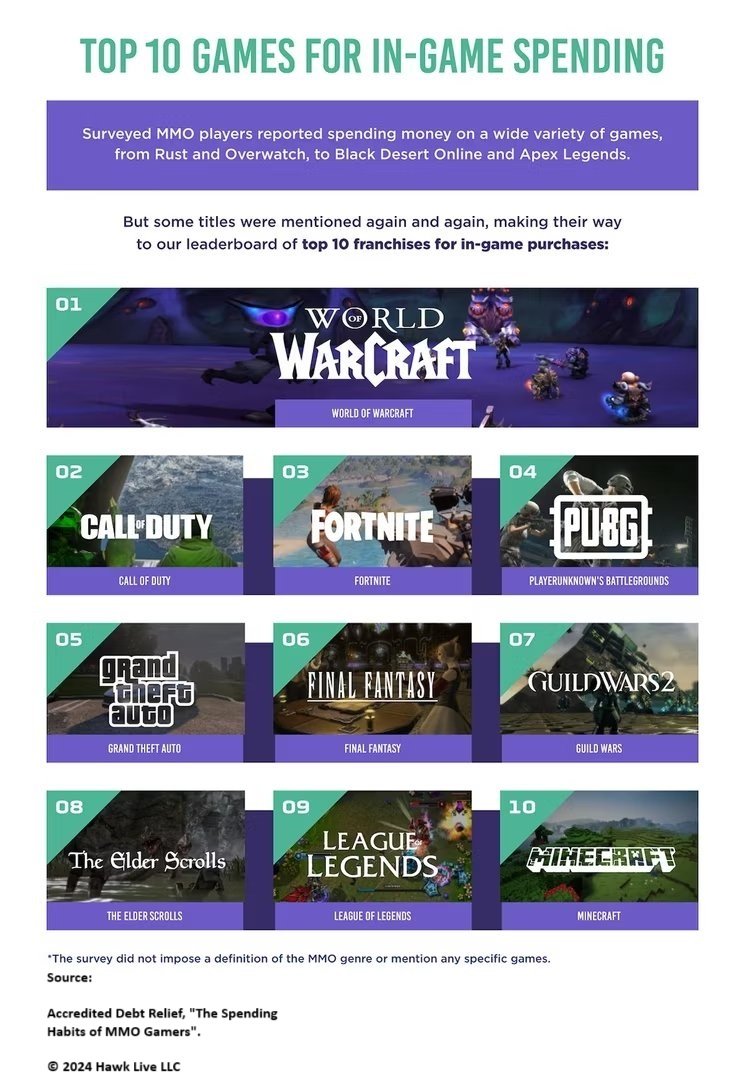 Consumer Spending Patterns in MMOs
A recent survey targeting American MMO players revealed that almost 90% have spent money on in-game purchases. This high participation rate underscores the depth of integration of microtransactions in the gaming experience, with an average lifetime spend of $229 on MMO games.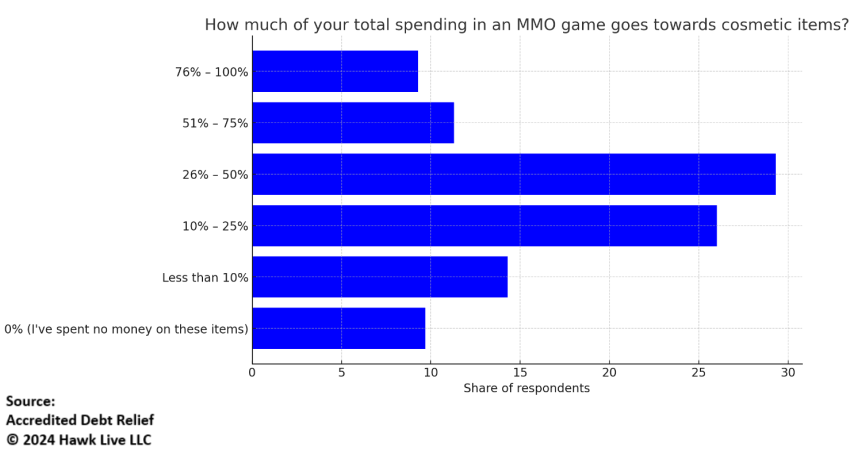 Despite the prevalence of free-to-play models, these figures indicate that free access to the game often leads to considerable spending on microtransactions, whether for competitive edge or social prestige within the game community.
Types of Cosmetic Items in MMOs
The range of cosmetics available in MMOs is vast and varied, enabling personalization at multiple levels of gameplay. These include:
Skins/Outfits: Altering the appearance of characters or avatars with unique clothing and armor.
Weapon Skins: Customizing weapons with distinctive colors and patterns.
Emotes and Gestures: Allowing players to express emotions through character animations.
Mounts and Vehicles: Offering aesthetic upgrades to player transportation.
Pet Companions and Decorative Items: Providing players with companions and items to enhance personal and in-game living spaces.
These cosmetics, while not influencing game mechanics, significantly affect player satisfaction and engagement, thereby driving continual revenue streams for developers.
Economic Impact and Opportunities
The economic implications of these transactions are profound. Companies like Riot Games and Epic Games have capitalized extensively on this model. Platforms such as DMarket have further facilitated the economic significance of these items by enabling a secondary market where players can trade skins and other virtual goods.
Conclusion
Investments in in-game cosmetics represent a complex interplay of player psychology, economic opportunity, and industry trends. Understanding these dynamics is crucial for anyone involved in the digital economy of gaming, from developers to players and economic analysts.
This exploration of the economic patterns of cosmetic purchases in MMOs highlights not only the significant financial implications but also the shifting paradigms in how games are played and monetized in the digital age. As this market continues to expand, it will undoubtedly offer both challenges and opportunities for the gaming community and the broader digital economy.
Discover more about the latest developments in competitive gaming by browsing our other research. Stay informed on how esports continues to shape modern entertainment.