
Game Changer: Unveiling the Future of Gaming with AI
Author: Hawk Live LLC
Last updated:

The Current State of AI in Gaming
AI has already started transforming the gaming industry in several ways, paving the way for more sophisticated and interactive gaming experiences. The global gaming industry, valued at over $300 billion, is capitalizing on the massive amount of data generated by games and the growing role of artificial intelligence in this sector to bring about unprecedented innovation.
The advances in big data analytics combined with AI are enabling game developers to better understand user behavior and preferences, which in turn facilitates the creation of more engaging gaming experiences. The impact of AI on gaming extends to many aspects, making games more compelling, responsive, and adaptive, and this trend is only expected to accelerate in the future.
Making Smarter and More Adaptive NPCs
AI is making non-player characters (NPCs) more adaptive, responsive, and smarter. In most games, NPCs follow pre-programmed behavior patterns, but AI enables these characters to react to game conditions in more dynamic ways, enhancing the player's gaming experience.
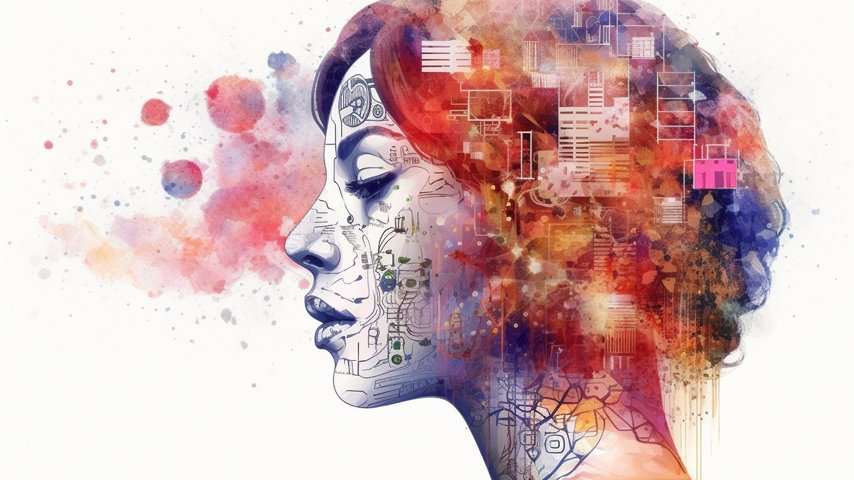
With AI, NPCs can learn from the player's actions and adapt their behavior accordingly, offering a level of interactivity and realism previously unheard of. Companies like SEED (EA) are at the forefront of this development, working on AI-enabled NPCs that adapt to each player's gameplay style, providing personalized experiences that maximize engagement and fun.
Creating More Realistic Gaming Experiences
AI has the potential to enhance game simulations, visuals, and realism. It can predict outcomes in complex systems, create new virtual gaming environments, and enhance real-time lighting and scenes. The predictive ability of AI can be used to create more immersive virtual worlds that respond to player actions in real-time.

In combination with virtual and augmented reality technologies, AI is unlocking new ways to make games more immersive and interactive. One such example is AI upscaling, a technique that significantly improves the graphics of online games. Tech giants like Nvidia are harnessing AI's power to render games at a higher resolution than conventional methods, making games look sharper and more detailed.
Cheating and Detecting Cheats in Multiplayer Games
Cheating in online multiplayer games is a significant issue that impacts the gaming experience negatively. AI is being leveraged to detect cheating patterns in players' movements and keys, helping maintain fairness in games. AI's pattern recognition capabilities can discern anomalies in player behavior that may indicate cheating, leading to prompt actions and maintaining the integrity of the game. At the same time, it's a constant race as cheaters also use AI to mimic human-like gameplay, making detection more challenging. This has given rise to a new layer of complexity in game design and management, necessitating more sophisticated AI mechanisms for cheat detection.
Generating Game Content
AI is revolutionizing the process of game content generation. From 3D objects, characters, abilities, to music and art, AI can generate these assets at scale, faster and cheaper than traditional means. This not only saves time and resources but also allows for more creative and diverse game content. AI systems can also create interactive narratives, adapting storylines based on learned data. AI Dungeon 2, a text-based fantasy simulation, is a prime example of how AI can offer unlimited content creation possibilities. This demonstrates the boundless potential of AI in creating unique, personalized gaming experiences.
Automating Game Testing
AI is being employed to automate the playtesting of games, making the process faster and more efficient. By handling thousands of complex test cases much faster than humans, AI identifies dynamically rendered items in video games and spots all the little things that could be removed from the game structure. AI-powered tools aid testers in performing their duties more efficiently, making game testing much smoother. Furthermore, AI can simulate player actions to a degree that would be impossible for human testers, thus ensuring that games are thoroughly checked for any potential issues before they reach the end-users.
The Future of AI in Gaming
The future of AI in gaming holds immense promise. AI will continue to empower the creation of online games, offering more interactivity, infinite combinations of stories and landscapes, high-level graphics and visuals, more realistic NPCs, and customized experiences. As the role of AI in the gaming industry is expected to grow even further, it can enable many more innovations. These include more realistic and progressive NPCs that evolve, learn, and adapt throughout the game, more advanced and challenging games that would extend the play-life of games, and even new possibilities to optimize video game mechanics. AI's impressive analytics capabilities could be further developed to study player behaviors and predict winning teams based on statistical and machine learning techniques.
Conclusion
The impact of AI on the future of gaming is profound and far-reaching. From enhancing the realism and interactivity of games to detecting cheats and automating game testing, AI is reshaping the gaming landscape in ways we couldn't have imagined a few years ago. As we look forward to more advanced applications of AI in gaming, it's evident that AI will continue to evolve and generate more diverse gaming experiences and environments for players. The potential applications of AI in gaming are fascinating, and while it's hard to predict how far AI can go in this field, one thing is clear: AI's impact on the future of gaming is just beginning.