
Revolutionizing Gaming: The Rise of AI Chatbots and Generative Language Models
Author: Hawk Live LLC
Last updated:
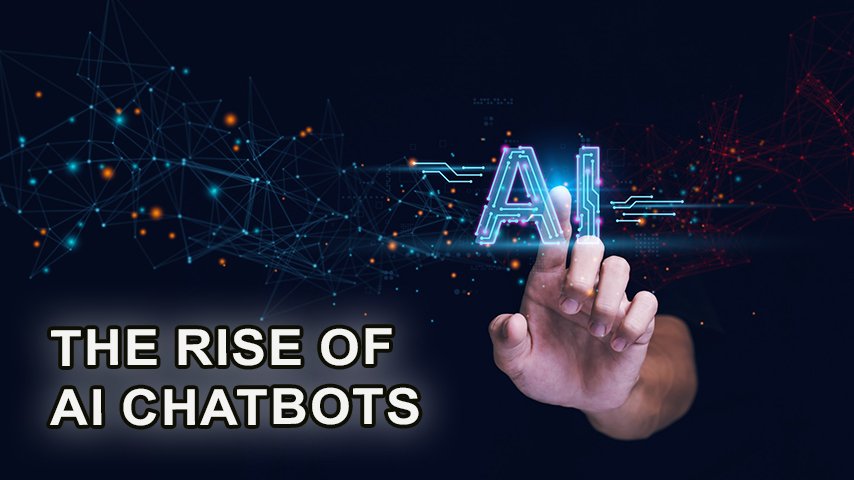
Generative AI chatbots are a type of chatbot that generates original combinations of language rather than selecting from pre-defined responses. They are based on large language models like GPT-3.5 (Generative Pre-trained Transformer 3.5) and use Natural Language Processing (NLP) and sentiment analysis to communicate in a human-like manner. They have evolved significantly from basic chatbots to conversational agents and now to generative AI, changing the landscape of various industries, including gaming.
ChatGPT
ChatGPT is an example of a generative AI chatbot developed by OpenAI. It is designed to take on tasks traditionally associated with “knowledge work” and shows the power of AI to do so. It uses a deep neural network architecture called GPT-3.5 and was pre-trained on a large corpus of text data. Despite its benefits, it has some limitations such as the high cost of running the model, which could impact its widespread use. There are other alternatives to ChatGPT like Claude from Anthropic and Bard from Google.
Building Chatbots with Generative AI
Building chatbots with generative AI has become easier with tools like the GPT-native engine from Botpress. It leverages the power of large language models to understand the relationships and context between messages, moving away from linear chatbot design. The engine also offers features like sentiment analysis and natural language generation, and allows you to generate the personality of your chatbot from a description.
PredictionIO
PredictionIO is an open-source machine learning platform used to build predictive engines based on machine learning algorithms. It offers services like building custom recommendation engines and sentiment analysis services with NLP. It also provides predictive analytics solutions and has features like custom templates, dynamic queries, data management, availability of multiple engines, and the alignment of machine learning models with business strategies.
Conclusions
Artificial intelligence and machine learning are playing an increasingly significant role in the gaming industry. The use of AI to create chatbots in games has become the foundation for a number of transformations, making access to complex games easier and improving the discovery of new games. This is due to large language models such as ChatGPT, which use natural language processing (NLP) and sentiment analysis to communicate with users in human language. ChatGPT, for example, is a generative pre-trained model that uses natural language processing to fulfill text user requests.
Models built on the basis of GPT, such as those proposed by Botpress, allow developers to create chatbots that can learn, analyze sentiments, and understand context and the interrelation between messages. This makes communication more natural and dynamic.
The PredictionIO platform also plays a crucial role in the development of the gaming industry. It's an open machine learning server that enables developers and data specialists to create predictive engines for any machine learning task. It includes recommendation engines, predictive analytics solutions, and sentiment analysis services based on NLP. All of this helps to improve sales and strengthen relationships with customers in the gaming industry.
Overall, the use of AI in the gaming industry has become an integral part of creating more interactive and personalized gaming experiences. This includes the development of chatbots and predictive analytics engines, which contribute to the creation of more dynamic and enriched games.