
Players of CS2 were found to be smarter than players of Dota 2: research results
Author: Hawk Live LLC
Last updated:
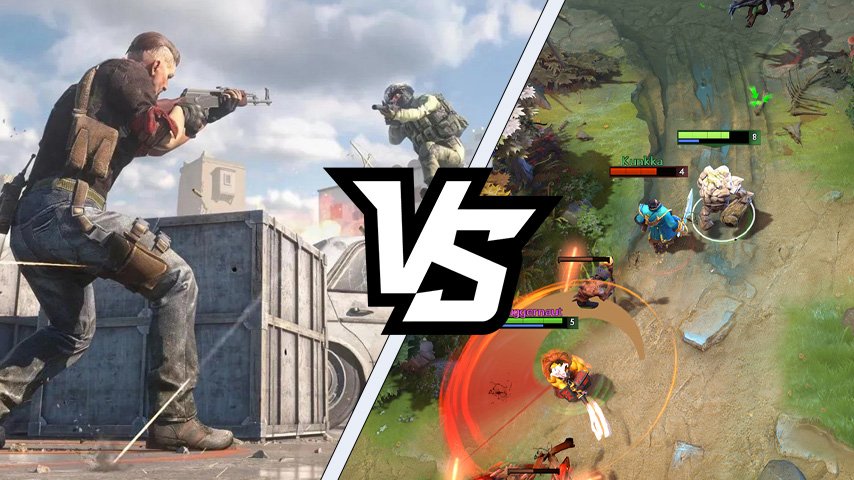
Researchers have often conducted studies aimed at measuring the cognitive abilities of players in various games. However, comparative analysis between users preferring different genres of games has been relatively rare. This issue has received little attention in the scientific community, so a study was conducted to examine the differences in cognitive abilities between those who prefer playing FPS and MOBA games.
Although the results were approximately similar in several parameters, in some cases, fans of FPS games (such as CS2, Valorant, etc.) performed better in testing than MOBA gamers (Dota 2, LoL, etc.).
The results of the study on the Relationship between Genres of Esports Games and Cognitive Performance were published on the ResearchGate scientific portal.
How the Study was Conducted
Given the significant interest in studying the cognitive abilities of esports players and their dependence on the game genre, researchers decided to focus on this issue and gather statistical data by conducting a series of tests aimed at assessing the abilities of different aspects of players' cognitive abilities and comparing them when drawing conclusions. While previous studies compared only high-level and low-level players, this study focused on enthusiasts of different genres.
The study involved 39 esports players aged 18 to 25, divided into two groups: MOBA players (n = 17) and FPS players (n = 22). All participants had a minimum of 10 years of gaming experience and played at least 4 hours per day in the last 6 months. Four cognitive tests were conducted: the Change Detection Test, the Macworth Clock Test, the Wall of Time Test, and the Flanker Test. Based on this, enthusiasts of different FPS and MOBA genres were compared.
Differences Between FPS and MOBA
It is crucial to understand that FPS and MOBA require the use of quite different skills. While strategic thinking is not always present in shooters, it is a crucial aspect in MOBA. On the other hand, FPS requires a greater emphasis on reaction speed. However, both genres require players to use a wide range of cognitive abilities.
FPS
FPS (First-Person Shooter) is a genre of video games in which the player controls a character from a first-person perspective, seeing the surrounding world through the eyes of their character. This is a dynamic type of game where quick reactions and decision-making speed are crucial, as the situation on the battlefield can change literally within seconds.
Features of the FPS genre:
Perspective: First-person view, players control the character, seeing the environment through their eyes.
Objectives: Quick reaction, shooting accuracy, movement control.
Gameplay: Focus on individual skills, speed, and real-time tactical decisions.
Examples: Counter-Strike, Call of Duty, Overwatch.
MOBA
MOBA (Multiplayer Online Battle Arena) is a genre of multiplayer online games where players control characters and fight in teams against other players or computer opponents. Here, it is crucial to use not only tactical skills but also strategic planning, as matches can last more than 1-2 hours sometimes.
Features of the MOBA genre:
Perspective: Top-down view, players control one hero in a team of five people.
Objectives: Strategic thinking, team coordination, resource management.
Gameplay: Focus on teamwork, long-term planning, and role execution.
Examples: Dota 2, League of Legends, Heroes of the Storm.
Change Detection Test
The change detection test is a methodology or task commonly used in psychological research to study a person's ability to notice changes in the surrounding environment. Typically, this test involves showing two or more images or scenes that slightly differ from each other and asking the person what exactly has changed. This helps understand how people perceive and process information about the surrounding world and what peculiarities they have in detecting changes.
Results:
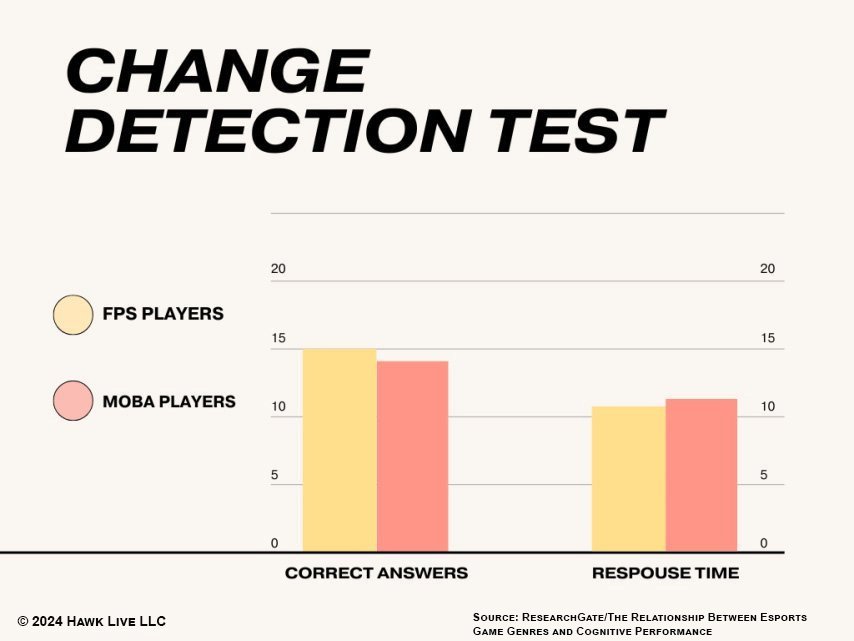
MOBA: Average number of correct answers — 13.58 ±2.67, reaction time — 10.48 ±2.72 seconds.
FPS: Average number of correct answers — 14.86 ±2.12, reaction time — 10.24 ±2.16 seconds.
No statistically significant differences were found between the groups in terms of the number of correct answers and reaction time.
Mackworth Clock Test
The Clock Drawing Test is a psychological test used to assess cognitive functions and identify possible issues with brain activity, especially in evaluating cognitive disorders such as dementia and Alzheimer's disease.
In the Clock Drawing Test, a person is asked to draw a clock face, indicate the time on the clock, and draw the hands to match the indicated time. Various aspects of the drawing are then analyzed, such as the placement of numbers, the evenness of the clock hands, and the correct indication of time. Evaluating these factors can help detect changes in cognitive functions and assess overall brain activity.
Results:
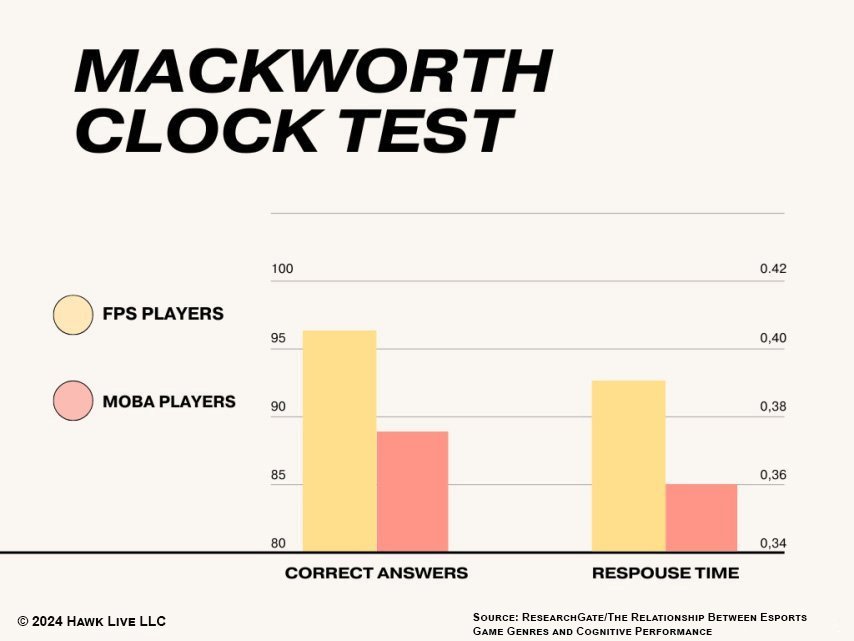
MOBA: Percentage of correct answers — 88.32 ±5.06%, reaction time — insignificant.
FPS: Percentage of correct answers — 96.19 ±2.65%, reaction time — insignificant.
FPS players showed higher scores in the number of correct answers compared to MOBA players, but reaction time did not differ.
Time Wall Test
The Wall of Time Test is a cognitive task used in psychological and neuroscience research to assess a person's ability to accurately estimate time intervals. In this task, participants are usually asked to estimate specific time intervals (e.g., 30 seconds, 1 minute) without the aid of external time-measuring devices such as clocks or watches.
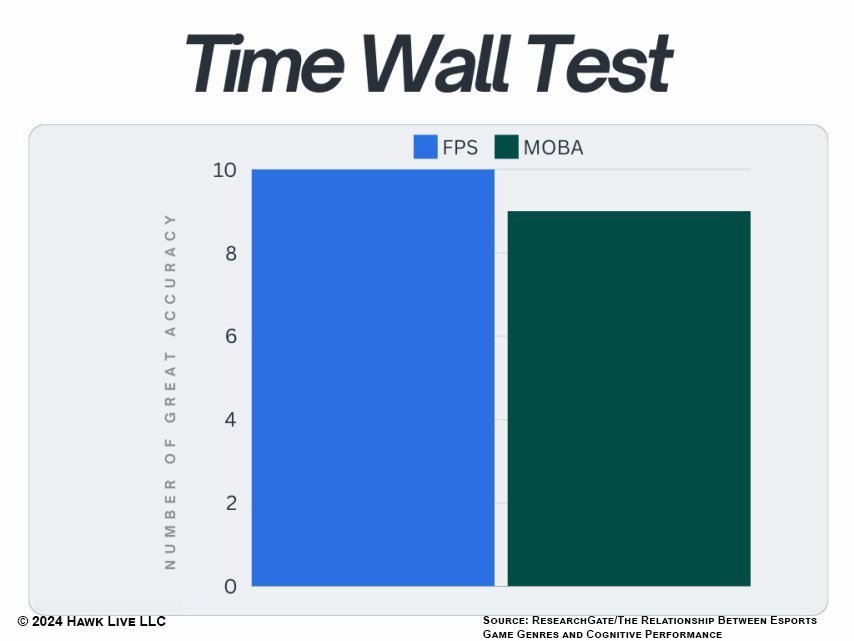
The Wall of Time Test is valuable for understanding how people perceive and evaluate time intervals.
Results:
MOBA: Accuracy — 9.41 ±3.62.
FPS: Accuracy — 9.71 ±4.22.
No statistically significant differences were found between the groups.
Flanker Task
The Flanker Task is a cognitive test often used to study attention, concentration, and the ability to inhibit unwanted reactions. In this test, participants are shown a series of symbols or words and are required to identify the central symbol or word while ignoring surrounding or "flanker" elements that may distract attention. This test is commonly used in psychological research to study cognitive processes related to information processing and attention control.
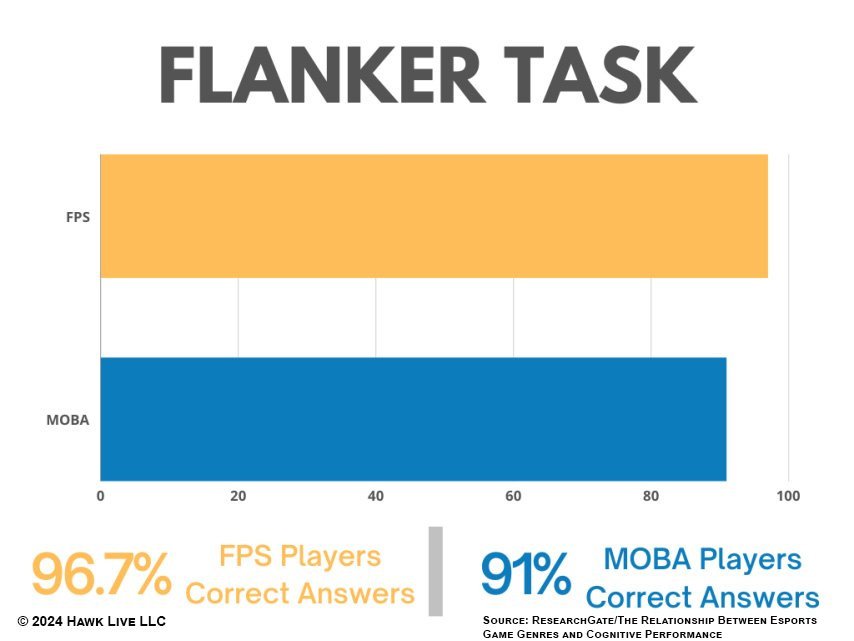
Results:
MOBA: Percentage of correct answers — 91.02 ±11.29%, reaction time — 0.42 ±0.05 ms.
FPS: Percentage of correct answers — 96.73 ±2.26%, reaction time — 0.38 ±0.03 ms.
FPS players showed better results in both the number of correct answers and reaction time compared to MOBA players.
Research Findings
The study showed that first-person shooter players perform better in concentration and react faster than MOBA players. This is likely due to the fact that shooters require quick reactions and accuracy.
On the other hand, MOBA games involve more strategic thinking and information memorization, which is why they did not show significant differences in other tests related to attention and memory.
Each genre requires its own set of skills, and understanding this can help players improve their skills and trainers in selecting suitable players.
If you’re looking to deepen your understanding of esports, check out our other research, where we explore tournaments, strategies, and the overall growth of the industry.