
Opposing views on NFT in cybersport
Author: Hawk Live LLC
Last updated:
Recently, there has been a lot of debate for and against the role of blockchain, NFT and cryptocurrencies in the future of cybersport and gaming itself. In October 2021, for example, Valve completely banned third-party developers from creating blockchain-based applications that issue or allow the exchange of cryptocurrencies or NFTs.
In response, Steam's closest competitor - Epic Games, has stated that, on the contrary, it is ready to host games that will use blockchain technology.
And in turn, Riot Games has filed a trademark application in the non-fungible token (NFT) sector.
What is the NFT?
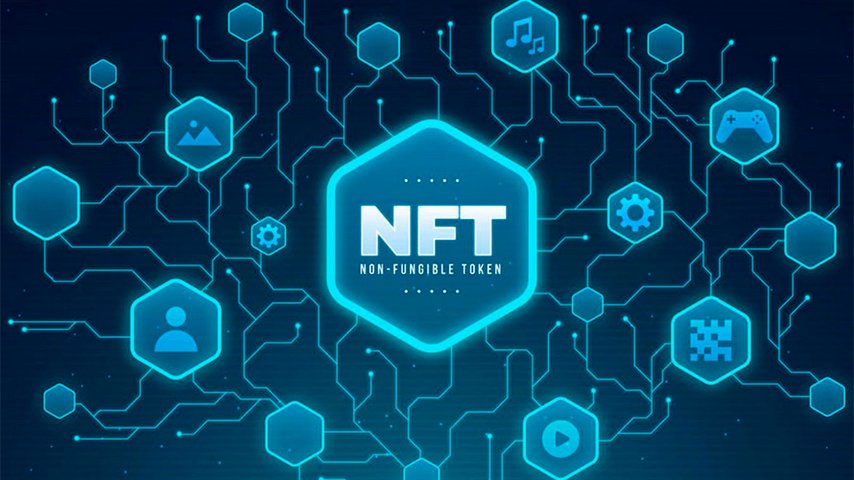
NFT or non-fungible token - refers to unique blockchain-based digital tokens used to register and track the ownership of digital assets such as images, video, text or audio.
There have been many high-profile NFT-related events over the past year. For example, the most expensive deal in the NFT segment was the sale of Beeple's «Everydays: The First 5000 Days» for $69.3 million.

But the games industry isn't standing still either, with a $1.5 million deal made by a player of the popular blockchain game Axie Infinity, who bought plots of land for 888.5 ETH. CryptoKitties is another popular game, and a deal of 600 ETH for a kitty named Dragon.
NFT has positioned itself within the eSports industry as a way of confirming ownership of in-game skins, highlights, trophies, etc. And the main advantage of NFT is the ability to enable the purchase, transfer and sale of these items outside of the virtual world and game industry.
The benefits of NFT in cybersport and games
The NFT helps to broaden opportunities for fan involvement in eSports, thus benefiting teams and players, tournament organizers, publishers, and other interested parties alike.

The eSports club Natus Vincere, for example, was the first to launch its own NFT for fans as a reward for watching the team's matches.

Team OG has released a case of commemorative rings. Players from the Dota 2 team managed to win The International tournaments in 2018 and 2019, thereby snagging four legendary championship rings. To mark the occasion, OG decided to paint the coveted rings and release the collection on the Nifty Gateway platform.
WePlay Collectibles is an NFT project that aims to bring together true eSports fans and talents, as well as artists and digital art enthusiasts. WePlay Collectibles has become a platform where NFT in the form of digital and physical eSports memorabilia and tournament-specific rewards, as well as unique objects and contemporary artworks can be purchased.

Similarly, NFTs can help create formal structures around grey market gaming assets and memorabilia to authenticate an ownership of such assets.
Disadvantages of NFT in cybersport and games
The cryptocurrency industry still faces protection issues, and this is very risky for many companies. Because NFTs are a subset of cryptocurrencies and they are still very new, they are largely misunderstood and the hype around pricing has the media fixated on their speculative nature. It is therefore not surprising that many lawyers advise cybersport organisations to avoid cryptocurrencies and NFT in general.

There is concern that the merger of NFT with cybersports and games could expose the community to the risk of fraud and hacking. In the past, the developer of Evolved Apes, which allegedly had a collection of 10,000 unique NFTs, turned out to be a fraud, disappearing with more than $2.7 million.

What can be a bridge between the NFT and the world of eSports

Verasity's CRO, Justin Wentzka, has announced that their platform, at the protocol and product level, will enable decentralised solutions for the cyber sports industry. Verasity aims to offer a platform that will enhance the cyber sports experience with blockchain-based solutions without forcing a rethink of the existing legacy infrastructures on which the industry operates.
For example, to tackle cheating, Verasity has developed a blockchain-based anti-fraud solution that authenticates digital assets by recording data in an immutable, decentralised log.
Similarly, the Verasity solution can authenticate the seller or the market in which the in-game NFTs are placed. This ensures that the seller has the legal right to sell such assets and that the assets are genuine and match their description.
Justin Wenzka concluded with a comment:
We think that NFTs present an opportunity for esports to attract a new audience, and we will continue to empower the esports industry with the tools and technologies needed to leverage emerging decentralised technologies for sustainable growth.