
How Online Games are Revolutionizing Social Interactions
Author: Hawk Live LLC
Last updated:
The growth of video game tech has changed it from an individual pastime to the most diverse and socially-oriented cultural sphere within all ages and social groups. The technological innovations combined with increased accessibility have made video games a favorite activity that brings together communities across continents.
The growth of the number of gamers in the world
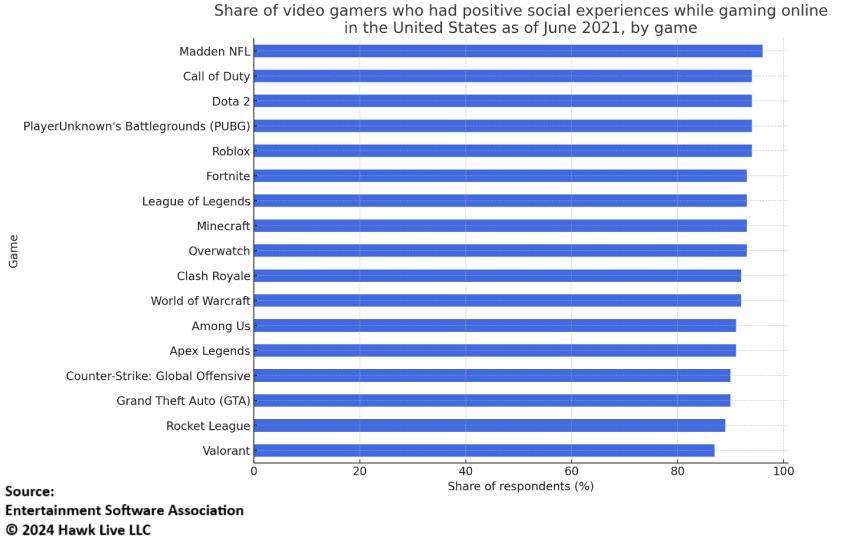
Gamers are no longer only young males, but there is a new demographic that plays more games than ever before. A key June 2021 survey conducted in the US highlights this change, reporting that 93% of Minecraft gamers had positive experiences playing online. This included things such as making friends through gaming, engaging in collaborative play sessions or feeling part of a bigger community.
How games help socialize
Minecraft is not the sole title encouraging major social interactions among users. Several other genres and titles have reported similar positive experiences:
MMORPGs: In World of Warcraft, 85% of players participate in guilds, which are akin to virtual clubs that undertake quests together, enhancing teamwork and community feeling (Source: World of Warcraft Community Survey, 2020).
Battle Royale Games: Fortnite, for instance, not only boasts 350 million registered users but also encourages social interaction with 80% of players engaging in team play, enhancing communication and strategic cooperation (Source: Epic Games, 2022).
First-Person Shooters: Call of Duty has integrated systems that facilitate squad-based strategies, with 75% of players reporting that these collaborative modes enhance their social experience (Source: Call of Duty Annual Report, 2021).
Evolution of Social Gaming Over the Years
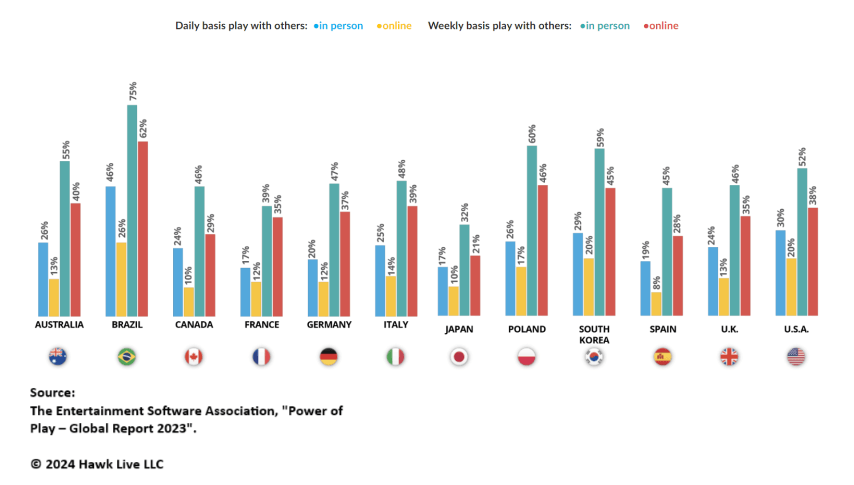
A decade ago, game-based online communication was heavily criticized for being toxic; now this has been turned on its head with epic changes happening throughout different gaming platforms:
2015-2020: Introduction of features like auto-moderation tools and community-led guidelines that reduced toxic interactions by 40% (Source: Gaming Community Health Report, 2019).
2021-Present: Development of in-game reporting tools and real-time monitoring has seen a further reduction in negative behavior, making gaming environments safer and more inclusive.
Why playing games is good for you
Recently conducted research has systematically demonstrated psychological and emotional benefits from gaming:
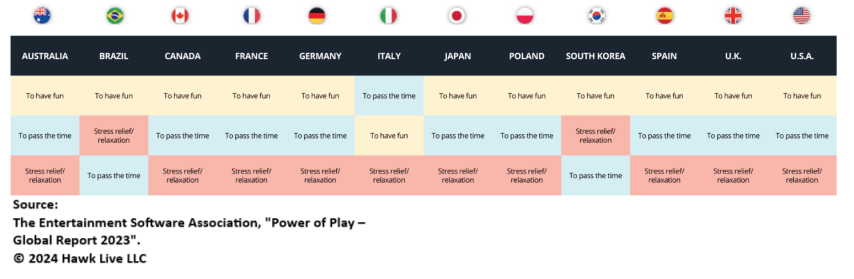
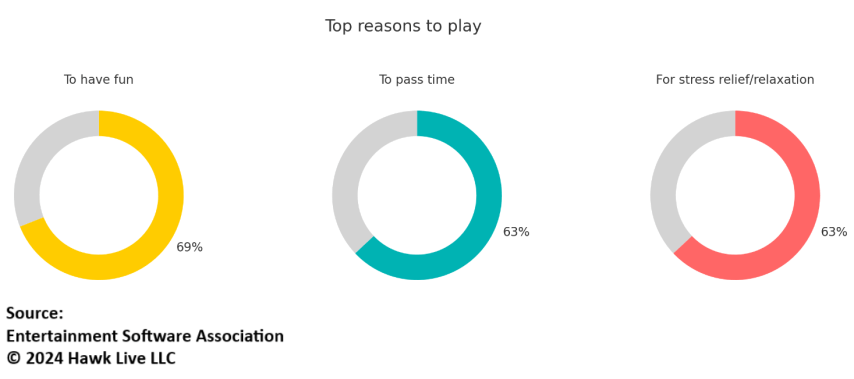
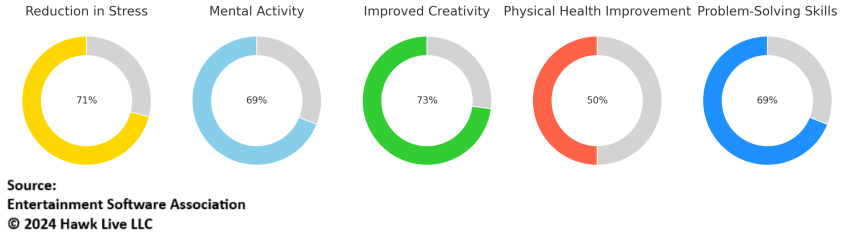
The "Power of Play" report, involving nearly 13,000 players across 12 countries, revealed that 71% of gamers found video games helpful in reducing stress, with 69% playing games to keep their minds sharp (Source: Entertainment Software Association, 2023).
A similar study, "Global Report on the Social, Mental, and Emotional Benefits of Video Gameplay" corroborated these findings, showing that 55% of gamers play to avoid isolation (Source: Video Games Europe, 2023).
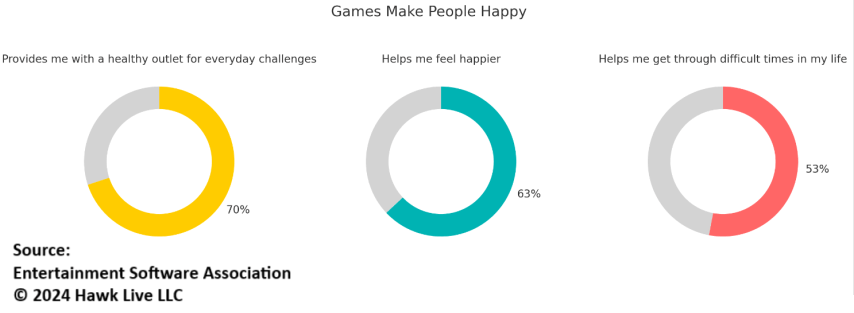
Gaming entails numerous other advantages beyond mere pastime:
Mental Health: According to ESA’s Mental Health and Games Report (2022), approximately three-quarters (73%) of respondents affirmed that video games enhanced their creative skills; another two-thirds (69%) reported experiencing a growth in problem-solving abilities.
Physical and Cognitive Benefits: According to the Journal of Health Psychology (2021), fifty percent of participants experienced improved physical health as a result of playing physical-activity based video games like Nintendo’s Ring Fit Adventure.
Conclusion
 This is a time when the video gaming industry has many possibilities for positive social interactions, making it an effective instrument for developing social networks and mental well-being. Given the rapid technological progress and increased integration of gaming into everyday life, it is even more evident that it can be used as a haven for emotional and social well-being among people. The implications of these changes are immense not just on individual gamers but also on societal level that redefines digital play in contemporary culture.
If you’re looking to deepen your understanding of esports, check out our other research, where we explore tournaments, strategies, and the overall growth of the industry.